How Does the Weather Post-Planting Influence Yield Performance
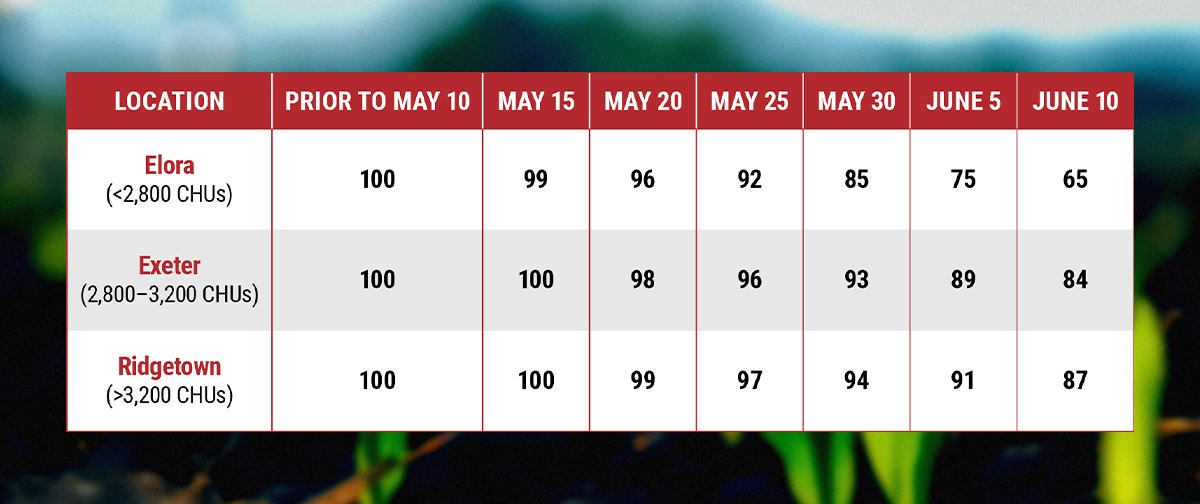
It is well known that the best yield potential for corn is when it gets planted early, especially if the conditions are right. The studies show that depending on location, even planting up to May 15th can give you 100% of your yield.
Table 1–10. Expected grain yield due to various planting dates
Trials conducted by the Ontario Corn Committee at the indicated location from 2006 to 2010. All data is derived from corn that had a population of 74,000 plants/ha (30,000 plants/acre). Yields are indexed relative to a planting date prior to May 10.
In the 2025 growing season, the opportunity presented itself to look at the effects of planting date in the Parkhill area.
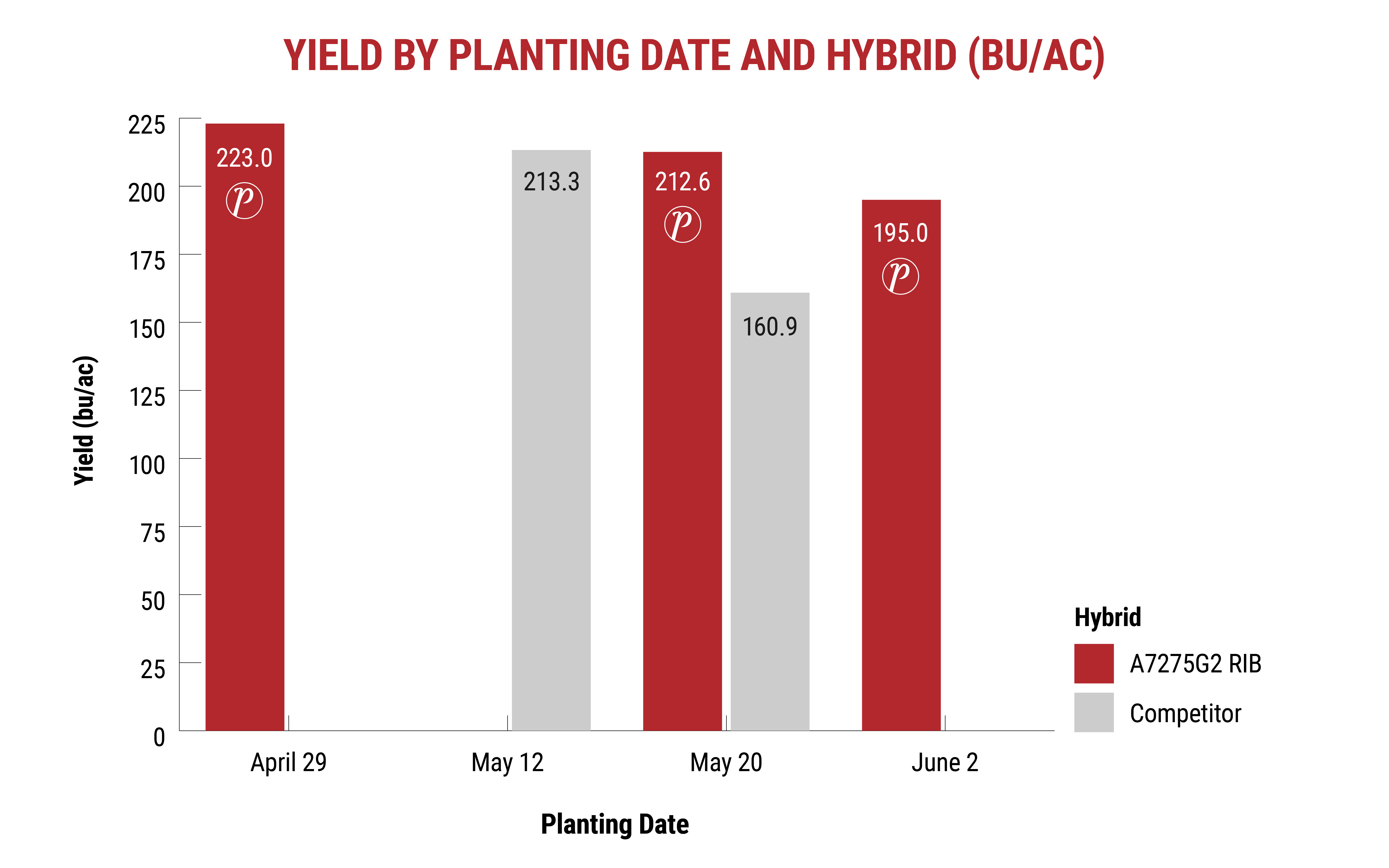
It’s easy to see that the trend exists - the earlier planted corn yielded higher than the late planted corn – but why is there such a sizeable difference between the May 12th and May 20th planted hybrid? The answer to the question lies in the weather data.
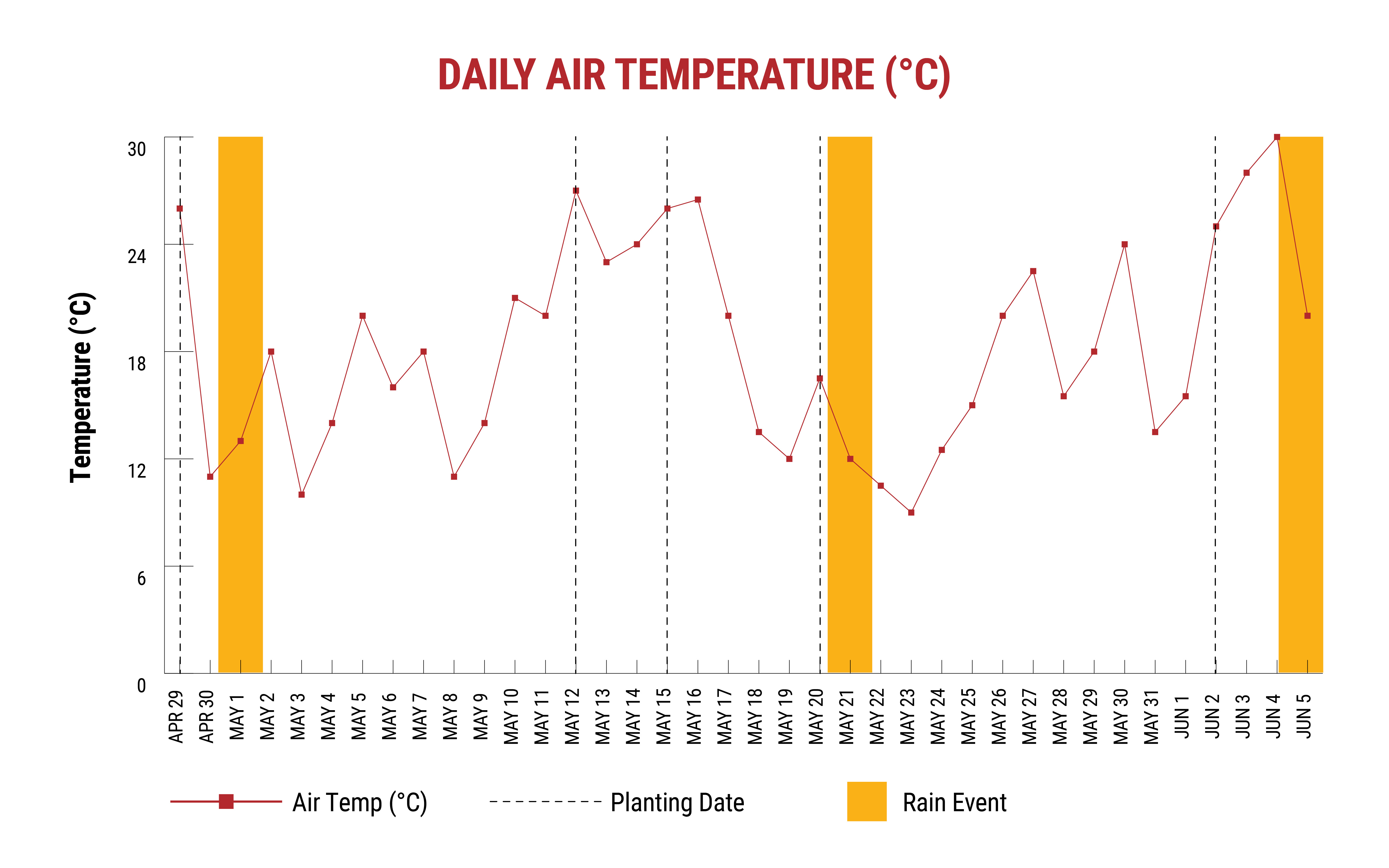
While temperatures dropped after several of the planting dates, only the drop following the May 20th planting appears to have a major impact on the final yield. In this case, it’s the rain event that occurred May 21st combined with the temperature drop that caused the 52 bu yield reduction.
“Cold rain within 24–48 hours of planting can significantly reduce yield potential.”
In the first 24-48 hours after planting a corn seed takes up its first drink of water, referred to as imbibition. When the seed imbibes cold water, the risk of chilling injury rises often resulting in reduced stands as the seed “dies”. Some seeds will appear to have never germinated at all, while others will start the process before halting growth. In addition, these seeds begin to decompose quickly and can make it difficult to diagnose a stand issue as caused by seed, disease or chilling injury without the overlying weather data.
The other rain events that occurred during planting happened 48–72 hours after the corn seed was in the ground, allowing them to weather the storm; they had the opportunity to absorb warmer water before the temperature dropped and the rain began.
Frequently, the goal is to get as many acres planted as possible before the next rain event; sometimes it’s a good decision, and other times it’s not. The next time the decision is made to plant or wait for the rain, first investigate the forecasted temperature accompanying that rain and use it to guide the decision.